Global data center energy consumption continues to rise alongside cloud computing demand and AI workload expansion. Efficiency metrics such as Power Usage Effectiveness (PUE) show gradual improvement, driven by advancements in cooling technologies and facility design.
Despite these gains, electricity demand remains a key challenge for operators. Statistical benchmarks indicate a growing emphasis on renewable energy sourcing, workload optimization, and geographic diversification to manage long-term energy costs.
Electric vehicle battery performance statistics highlight improvements in average driving range and charging efficiency across newer models. Data collected from fleet operators and consumer reports indicates reduced degradation rates compared to earlier battery generations.
Charging behavior analysis shows a growing preference for fast-charging infrastructure, particularly in urban environments. Usage data also reflects increased confidence in battery reliability, contributing to higher daily utilization rates among EV owners.
Consumer electronics usage data reveals continued dominance of smartphones, while secondary devices such as tablets and laptops show stable but slower growth. Usage metrics point toward longer replacement cycles, particularly in mature markets where device performance improvements are incremental.
Wearables and smart accessories, however, demonstrate higher engagement rates, especially for health monitoring and connectivity features. Behavioral statistics suggest that consumers increasingly favor ecosystem compatibility and software support over hardware specifications alone.
Demand for AI-specific processors has accelerated as enterprises increase investment in machine learning workloads and generative AI infrastructure. Shipment data highlights strong growth in GPUs, TPUs, and custom accelerators, largely driven by cloud service providers and large-scale data centers.
Industry statistics also show a shift toward energy-efficient architectures, as power consumption becomes a critical constraint. Survey data suggests that organizations are prioritizing performance-per-watt metrics alongside raw compute capability when selecting AI hardware platforms.
The global semiconductor supply chain continues to experience structural shifts driven by capacity expansion, geopolitical realignment, and rising demand from advanced computing applications. Manufacturing concentration remains high, with a limited number of regions accounting for the majority of fabrication output, while lead times for advanced nodes show gradual normalization compared to previous years.
At the same time, inventory levels across downstream electronics manufacturers reflect cautious procurement strategies. Data from industry associations and supplier disclosures indicate a growing focus on localized sourcing, increased capital investment in fabs, and long-term supply agreements to reduce volatility.
For years, email marketing has been declared “dead.” Yet the data from 2025–2026 tells a very different story. Email remains one of the most reliable, cost-effective, and controllable digital marketing channels available to businesses today.
Email Marketing Still Delivers Strong ROI
Despite the rise of social media and AI-driven platforms, email continues to generate one of the highest returns on investment. Businesses are seeing consistent engagement because email reaches users directly, without relying on unpredictable algorithms.
Unlike social platforms, email lists are owned assets. You control when, how, and to whom your message is delivered—making it a stable long-term strategy.
Open Rates Are Improving With Smarter Targeting
Generic mass emails may be struggling, but personalized and segmented campaigns are performing better than ever. Brands that tailor subject lines, content, and timing based on user behavior are seeing higher open and click-through rates.
Automation tools and AI-powered insights have made it easier to send the right message at the right moment, improving relevance and reducing unsubscribe rates.
Email Outperforms Social for Conversions
Social media is excellent for discovery, but email is where conversions often happen. Customers are more likely to purchase, sign up, or book services through email compared to organic social posts.
Emails also support the full customer journey—from onboarding and education to retention and reactivation—something few channels can match.
Trust and Privacy Work in Email’s Favor
As users become more aware of privacy issues, email feels more transparent and intentional. People choose to subscribe, and they can opt out at any time. This consent-driven nature builds trust, especially compared to intrusive ads.
The Future of Email Marketing
Email isn’t dying—it’s evolving. Interactive emails, AI personalization, and better analytics are shaping the next phase. Brands that focus on value, relevance, and consistency will continue to see strong results.
The artificial intelligence revolution isn’t coming—it’s here. As we navigate through 2026, AI has moved from experimental technology to an essential component of modern work, transforming how we create, collaborate, and compete. The statistics paint a picture of unprecedented change: businesses racing to integrate AI into their operations, workers adapting to new roles and skills, and creators harnessing machine intelligence to produce content at scales previously unimaginable.
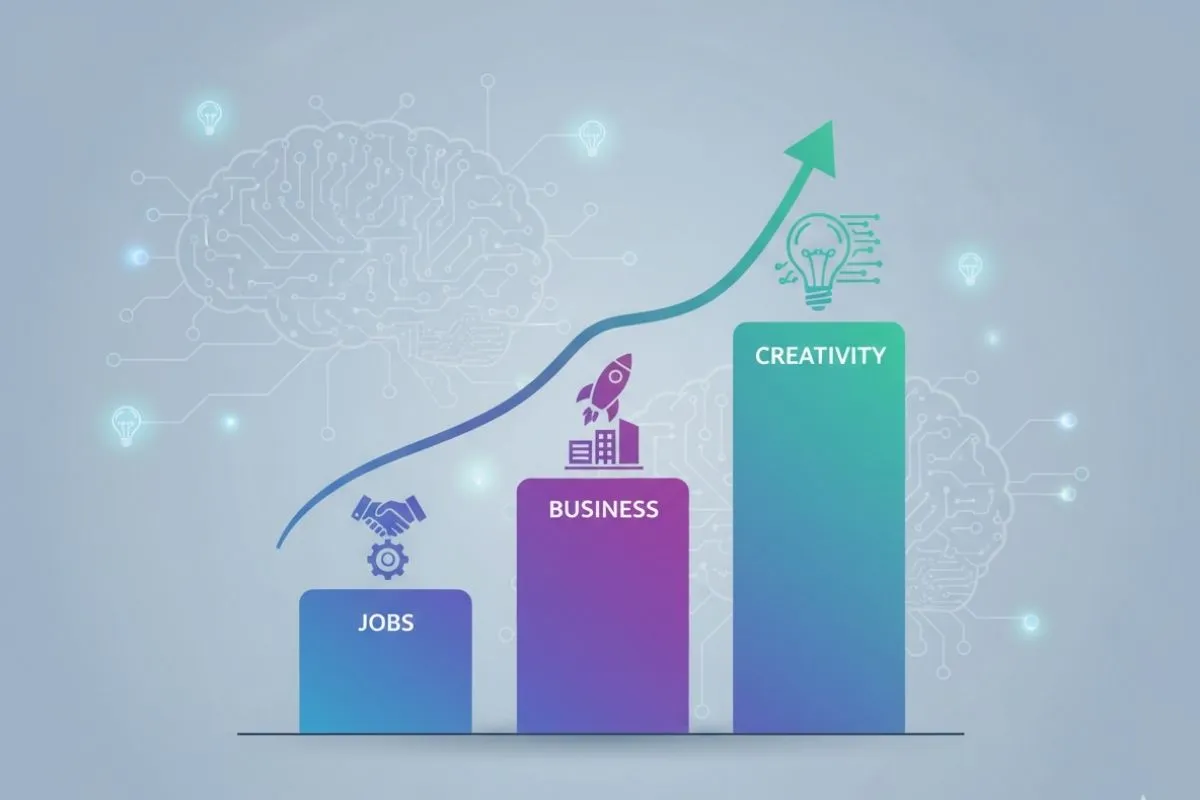
This article examines 15 key statistics that reveal the profound impact AI is having across three critical domains: employment and the job market, business operations and productivity, and creative work and content generation. These numbers tell the story of a world in transition—one where the pace of change is accelerating and the implications are both promising and challenging.
The Employment Landscape: AI’s Complex Impact on Jobs
1. 91% of Organizations Are Using AI Technology
By 2026, approximately 91% of employees report that their organizations are using at least one form of AI technology. This widespread adoption spans well beyond the tech sector, with significant implementation in healthcare, finance, manufacturing, and retail. The ubiquity of AI in the workplace signals a fundamental shift in how organizations operate, making AI literacy increasingly essential for workers across all industries.
What’s particularly notable is how quickly this adoption has occurred. Just three years after ChatGPT’s public debut in late 2022, AI has become deeply embedded in corporate infrastructure. This rapid integration suggests that companies view AI not as a nice-to-have innovation but as a competitive necessity.
2. Young Workers Face Higher Unemployment in AI-Exposed Jobs
Research from the Federal Reserve shows that among young labor market entrants, the job finding rate has declined significantly in occupations with higher AI exposure since November 2022, with the young, most AI-exposed group experiencing a decline of more than 3 percentage points since November 2023.
This statistic reveals one of AI’s most concerning near-term impacts: early-career workers are finding it harder to secure positions in occupations where AI can perform many entry-level tasks. There has been a 13% decline in employment for workers aged 22-25 in AI-exposed jobs since late 2022. The challenge isn’t primarily driven by layoffs but rather by fewer young people successfully transitioning from being out of the workforce into employment—suggesting that companies may be hiring AI instead of junior staff.
3. 37% of Business Leaders Plan to Use AI for Workforce Reduction
Currently, 37% of business leaders report they expect to replace human workers with AI by the close of 2026 as they move from experimental pilots to full-scale automation. This represents a significant shift from earlier phases of AI adoption, where the technology was primarily used to augment rather than replace workers.
However, it’s important to note the context: for leaders planning to reduce their workforce over the next year, the “general need to cut costs” was the only reason cited by survey respondents, rather than inflation, tariffs, decreased demand, or efficiency gains from AI. This suggests that while AI provides the capability for workforce reduction, economic pressures are the primary driver.
4. Jobs Are Being Transformed, Not Just Eliminated
89% of senior HR leaders say AI will impact jobs in 2026, with about 45% saying AI will impact nearly half or more than half of all jobs. However, “impact” doesn’t necessarily mean elimination. The survey defined “impact” as having a significant portion of an employee’s previous tasks automated or changing the way they work on a daily basis.
This distinction is crucial. Many jobs are being reshaped rather than replaced, with AI handling routine tasks while humans focus on higher-value activities that require judgment, creativity, and interpersonal skills. The key question for workers isn’t whether AI will affect their job, but how they can adapt to work alongside these systems effectively.
5. AI Skills Command Massive Wage Premiums
Workers with AI skills such as prompt engineering now earn a 56% wage premium, up from 25% last year. Machine learning skills add 40% to hourly earnings; TensorFlow adds 38%; deep learning adds 27%; natural language processing adds 19%; and data science adds 17%.
These dramatic wage premiums underscore a critical reality: while AI may automate some jobs, it’s creating significant economic opportunities for workers who develop relevant technical skills. The doubling of the prompt engineering premium in just one year demonstrates how quickly the market is valuing AI-adjacent capabilities. For workers concerned about AI’s impact on employment, upskilling in AI-related areas represents a clear path to career resilience and enhanced earning potential.
Business Transformation: Productivity and Economic Impact
6. AI Could Add Up to $4.4 Trillion Annually to the Global Economy
Based on McKinsey’s research, which analyzed 63 use cases, generative AI could add $2.6 trillion to $4.4 trillion annually to the global economy. This enormous economic impact stems from AI’s ability to transform multiple aspects of business operations—from automating repetitive tasks to enabling entirely new business models.
To put this in perspective, AI could contribute up to USD15.7 trillion to the global economy by 2030, more than the current output of China and India combined. Of this, USD 6.6 trillion is likely to come from increased productivity and USD 9.1 trillion is likely to come from consumption-side effects. These projections suggest that AI’s economic influence will be among the most significant technological transitions in modern history.
7. 64% of Businesses Expect AI to Significantly Impact Productivity Growth
Approximately 64% of businesses expect that adopting AI will significantly impact productivity growth. This optimism is backed by concrete evidence: Based on PwC research, artificial intelligence has the potential to supercharge employee productivity by 40% by 2035.
The productivity gains aren’t theoretical. Organizations are already seeing measurable improvements. More than 57,000 team members at Telus are regularly using AI and saving 40 minutes per AI interaction. When multiplied across large organizations and entire industries, these time savings translate into substantial efficiency gains and cost reductions.
8. 88% of Organizations Are Using AI Regularly
Nearly nine out of ten survey respondents say their organizations are regularly using AI, representing an increase from 78% just a year ago. This ten percentage point jump in a single year demonstrates the accelerating pace of AI integration across the business landscape.
The breadth of adoption is equally impressive. Marketing and sales lead all business functions in GenAI use, with 42% of companies adopting it in this area. This is more than twice the overall average of 19%. Other functions where companies commonly use GenAI include product and service development (28%), IT (23%), and service operations (22%). AI is no longer confined to tech departments; it’s spreading across every business function.
9. The Global AI Market Will Grow at 28.46% Annually
The global AI market is projected to grow at an annual rate of 28.46% over the next five years, reaching a value of $826.7 billion by 2030. Additionally, AI has an expected annual growth rate of 36.6% between 2024 and 2030.
These growth rates are extraordinary compared to other industries. To provide context, the retail industry has an expected growth rate of 7.65% between 2024 and 2029, while the e-commerce market growth rate for the same period is 12.22%. AI’s growth rate is roughly three to four times faster than even digital-native industries, indicating its fundamental importance to the future economy.
10. AI Drives Time Savings at Scale
Recent research reveals tangible productivity improvements from AI adoption. A new study from the London School of Economics finds that employees who use AI for work tasks save an average of 7.5 hours per week. That’s nearly a full workday returned to employees each week—time that can be redirected toward strategic thinking, innovation, or improved work-life balance.
For organizations, these time savings compound across the workforce. When hundreds or thousands of employees each save hours per week, the aggregate impact on organizational capacity becomes transformative. Companies can accomplish more with existing headcount or redirect resources toward growth initiatives.
The Creative Revolution: AI-Powered Content Generation
11. More Video Content Will Be Created in 2026 Than Ever Before
According to Seagate CEO Dave Mosley, “More video content, in particular, will be created in 2026 than at any time in history.” This explosion in content creation is being powered by AI tools that dramatically lower the barriers to video production.
In the first five months, Google Flow powered by Veo generated more than 275 million videos. The scale of AI-generated content is staggering and represents a fundamental shift in how visual media is produced. Every day, creators, businesses, and individuals are leveraging AI to produce content that would have required professional video teams just a few years ago.
12. Over 15 Billion AI Images Have Been Created Since 2022
Over 15 billion AI images have been created since 2022, with around 34 million AI images created daily. To understand the magnitude of this shift, generative AI reached 15 billion images in about 1.5 years – a feat that took traditional photography roughly 149 years to achieve.
Around 80% of all AI-generated images to date have been produced using tools, platforms and apps built on Stable Diffusion — an open-source model. Adobe Firefly has been used to generate over 7 billion images since it was launched in March 2023. This democratization of visual content creation is empowering individuals and small businesses to produce professional-quality imagery without expensive equipment or extensive training.
13. The Generative AI Content Creation Market Will Reach $80 Billion by 2030
The global generative AI in content creation market size was estimated at USD 14.8 billion in 2024 and is projected to reach USD 80.12 billion by 2030, growing at a CAGR of 32.5% from 2025 to 2030. This explosive growth reflects the technology’s impact across multiple content verticals—from marketing copy and social media posts to video scripts and product descriptions.
The entertainment and media sector is leading this transformation. The entertainment and media segment led the market in 2024 due to the growing demand for innovative and cost-effective content production solutions. AI-driven tools are increasingly being used to generate music, scripts, animations, video effects, and even personalized content for streaming platforms.
14. 83% of Marketers Report Creating More Content with AI
A growing majority, 83%, say generative AI lets them create much more content than before. 88% of marketers use AI daily, 93% to speed content creation, 90% for faster decisions, 81% for insights. This dramatic increase in content production capacity is enabling brands and creators to maintain consistent engagement across multiple platforms and formats.
The practical applications are diverse: AI applications cover emails (47%), text-based posts (46%), video posts (46%), and long-form blogs (38%). 64% use AI to better understand customers, 65% report improved SEO results from AI-generated content. Marketers aren’t just creating more content—they’re using AI to make that content more effective and better targeted to audience needs.
15. The AI Creator Economy Will Reach $12.85 Billion by 2029
The artificial intelligence in the creator economy market, valued at $3.31 billion in 2024, is expected to reach $4.35 billion by 2025, at a compound annual growth rate (CAGR) of 31.4%, and is anticipated to reach $12.85 billion by 2029, maintaining a CAGR of 31.1%.
This rapid growth reflects how AI is empowering individual creators, influencers, and small content businesses. The surge is largely fueled by the increasing adoption of AI tools by individual creators, the demand for personalized content, an uptick in influencer-led brand collaborations, and elevated audience engagement analytics. AI is leveling the playing field, allowing solo creators to compete with larger production companies by automating technical tasks and scaling content production.
What These Statistics Mean for the Future
The 15 statistics presented here reveal a world in the midst of profound transformation. AI is simultaneously disrupting traditional employment patterns, supercharging business productivity, and democratizing creative work. The implications are complex and multifaceted:
For Workers: The message is clear—adaptability is essential. While some entry-level positions are becoming harder to secure, workers with AI skills are commanding substantial wage premiums. The future belongs to those who can effectively collaborate with AI systems and bring uniquely human capabilities—judgment, creativity, emotional intelligence—to their work.
For Businesses: AI adoption is no longer optional for organizations that want to remain competitive. The companies seeing the greatest benefits are those integrating AI deeply into workflows, not just deploying it for isolated tasks. The productivity gains are real, but they require thoughtful implementation and organizational change.
For Creators: AI is ushering in a renaissance of content creation, enabling individuals to produce professional-quality work at unprecedented scale. However, this also means increased competition and the need to find authentic voice and differentiation in a sea of AI-generated content.
Looking Ahead
As we move through 2026 and beyond, AI’s influence will only intensify. The statistics suggest we’re still in the early stages of this transformation, with adoption rates climbing and new applications emerging regularly. The organizations, workers, and creators who thrive will be those who view AI not as a threat but as a powerful tool—one that amplifies human capabilities when wielded thoughtfully.
The key to navigating this transition successfully lies in continuous learning, strategic adaptation, and maintaining focus on the distinctly human elements that AI cannot replicate. While machines can process data, generate content, and automate tasks with impressive efficiency, they cannot replace human judgment, ethical reasoning, and genuine creativity.
The AI revolution is reshaping our world at a pace that’s both exhilarating and unsettling. These 15 statistics offer a snapshot of where we are in this journey—and hint at the remarkable transformations yet to come. The question isn’t whether AI will change your industry, your job, or your creative work. The question is how quickly you can adapt to harness its potential while preserving what makes human contribution irreplaceable.